projects / what she carried
Independent · NYU ITP Thesis
Thesis Project: What She Carried
A VR archive of memory and migration.
Client
Independent · NYU
ITP Thesis
Role
VR Design ·
Participatory
Research
DISCIPLINE
Immersive
storytelling · Digital
memorial
Year
2022-2024
Tools
Unity · Blender ·
Photogrammetry ·
Spatial Audio
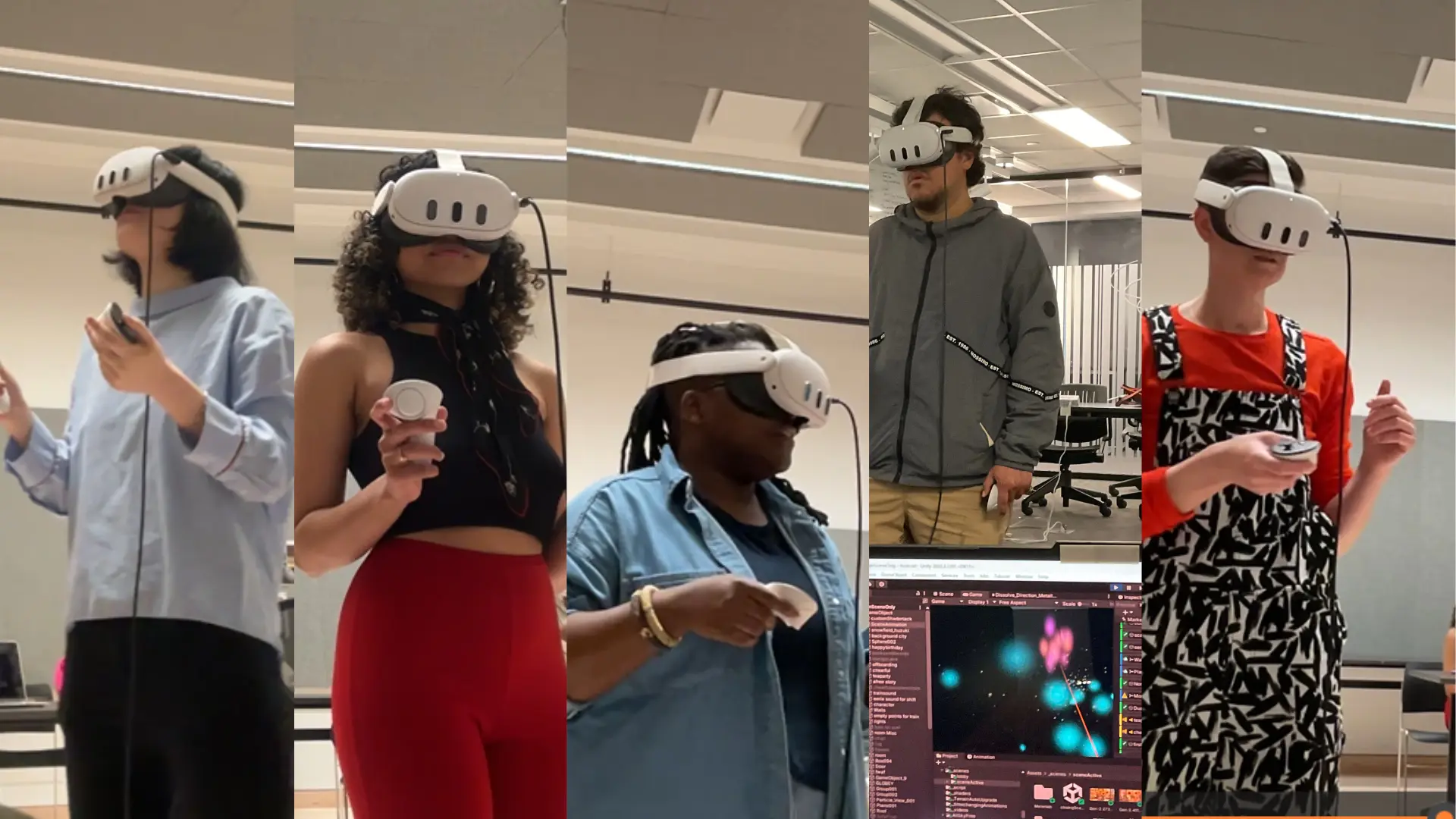
the work.
Partition is remembered
in numbers.
Fourteen million displaced. Hundreds of thousands killed. Borders drawn in six weeks.
What the numbers don't hold are the keys kept for houses that no longer exist, the shawls folded into suitcases that crossed in both directions, and the photographs that became the only record of people left behind. What She Carried begins there, with objects.
it begins with objects.
The things that crossed over.
Through in-depth interviews with families across Pakistan, India, and Bangladesh, I gathered personal histories tied to the everyday things that survived the 1947 Partition. Objects that were carried, hidden, inherited, and quietly passed on.
Participants were collaborators, not subjects. They were involved in how their stories would be held and shared, and consent and care sat at the centre of every research decision.
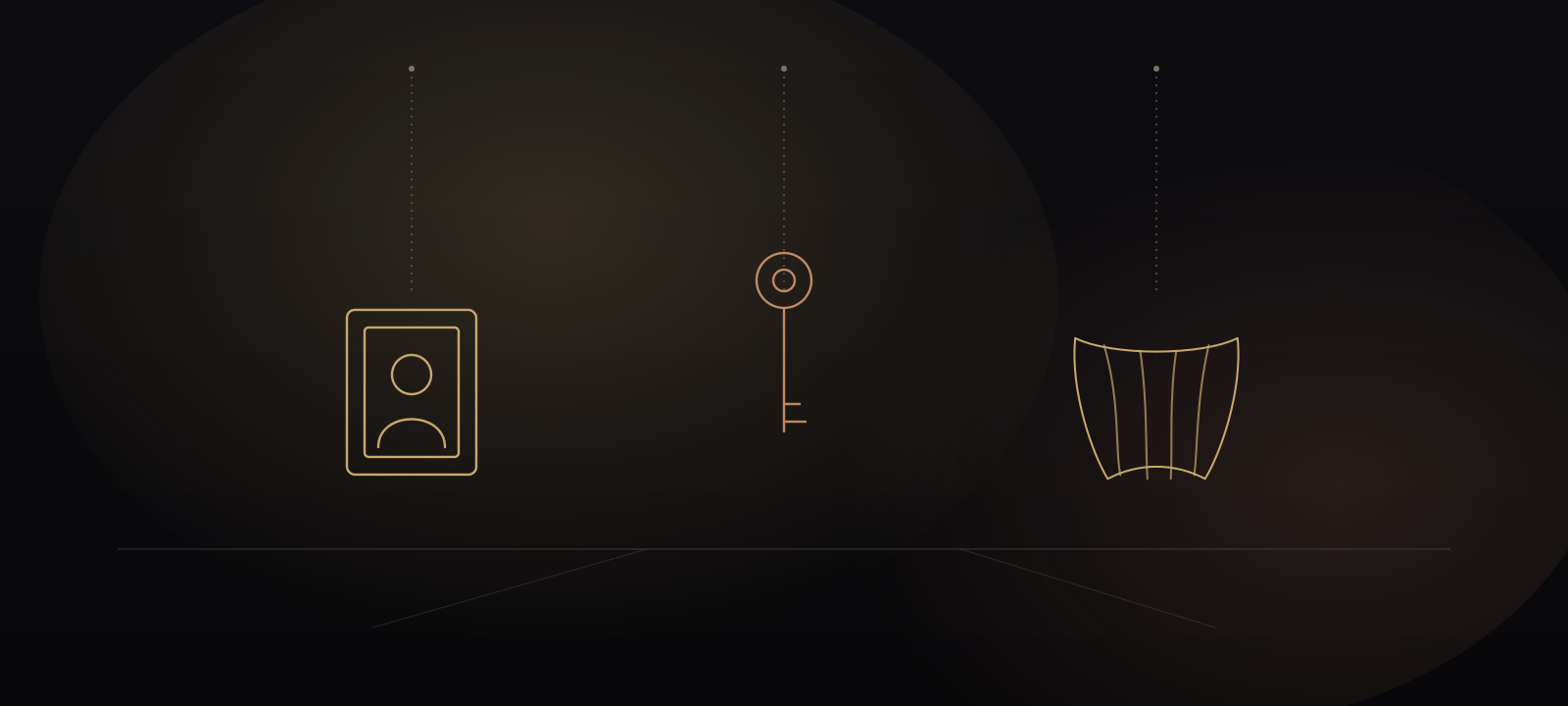
a room you witness, not solve.
Grounded and suspended at once.
Those objects and voices became the material for a VR experience built in Unity, using photogrammetry to bring real artifacts into immersive 3D space. The environments are deliberately neither realistic nor abstract. Rooms that feel grounded and suspended at the same time, where objects float in symbolic space and ask to be looked at rather than handled.
Users move slowly through objects that each hold a single story, with photorealistic textures set against minimal surroundings, so the emotional weight of the objects stays central.
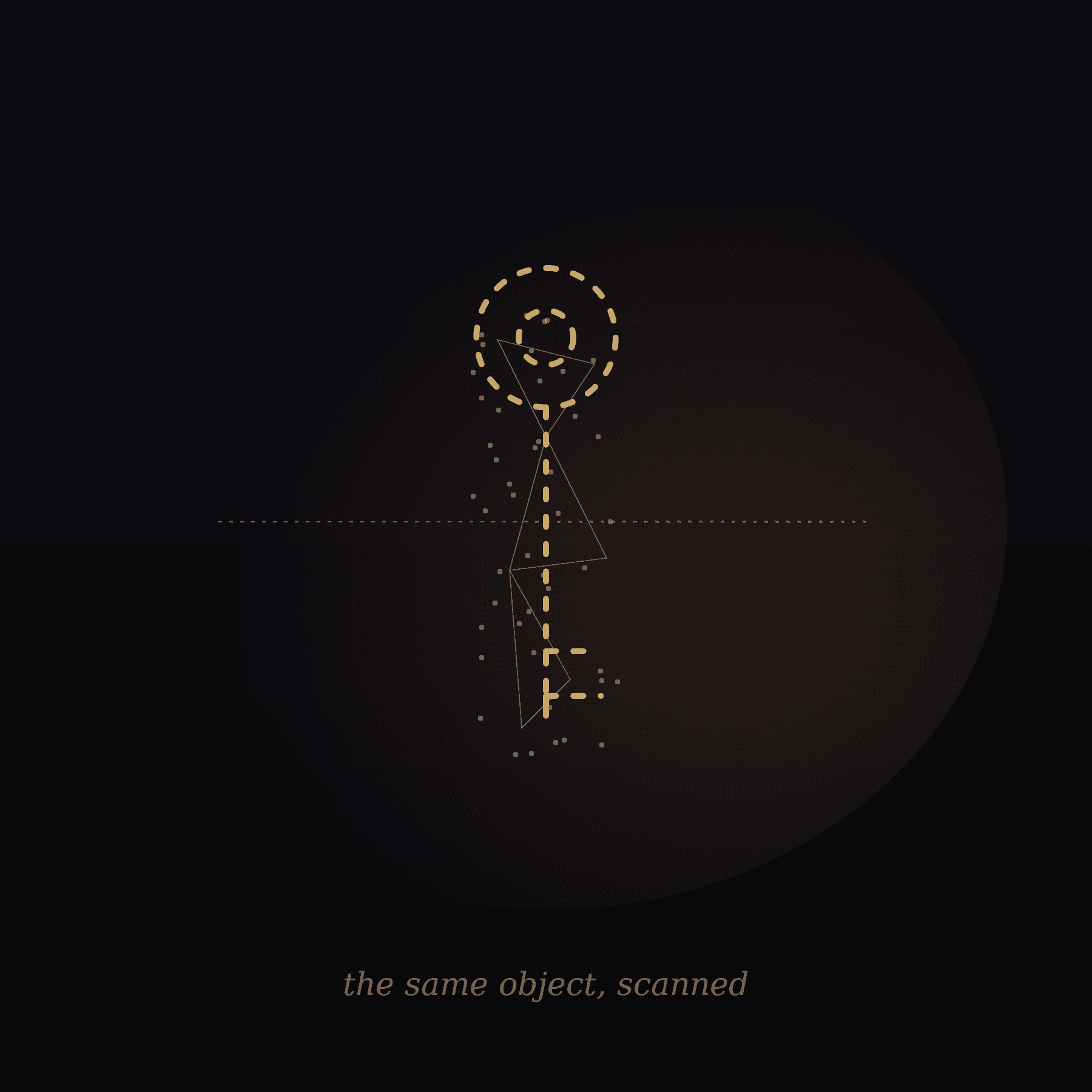

Photogrammetry turned each artifact into a 3D object you could move around inside, keeping its real texture while letting it float free of the world it came from.
This is not a reenactment. It is an
invitation to witness.
sound carries what space can't.
Not just what is remembered, but how.
Sound does as much work as space. Spatial audio layers ambient soundscapes with excerpts from the interviews, carrying not just what is remembered but how it is remembered. The pauses, the corrections, and the things that still don't have words.

designed for silence.
Some wounds resist narration.
Guided by trauma-informed design, the experience avoids graphic reenactment. It makes room for fragmentation, silence, and absence, recognising that some stories stay incomplete and some wounds resist being told. The aim is reflection without retraumatisation, a space to engage with memory carefully rather than relive it.
the outcome.
A memorial, and a speculative archive.
What She Carried functions as a digital memorial and a speculative archive. A space where a history too large to hold can be met at the scale of a single object, a single voice, a single room. It was exhibited as part of my NYU ITP thesis, and it remains the fullest expression of how I want to work. Research, technology, and design in service of something that matters.
The most powerful thing a designer
can do is sometimes simply make
space. For memory, for absence, for
what couldn't be brought across but
wasn't forgotten either.
See something you like or have any questions?
Drop me an email at aliza.habib@nyu.edu