Client
Role
Industry
Year
Figma, Miro, Google Forms, WCAG Guidelines, Nielsen Heuristics, Maze
Tools
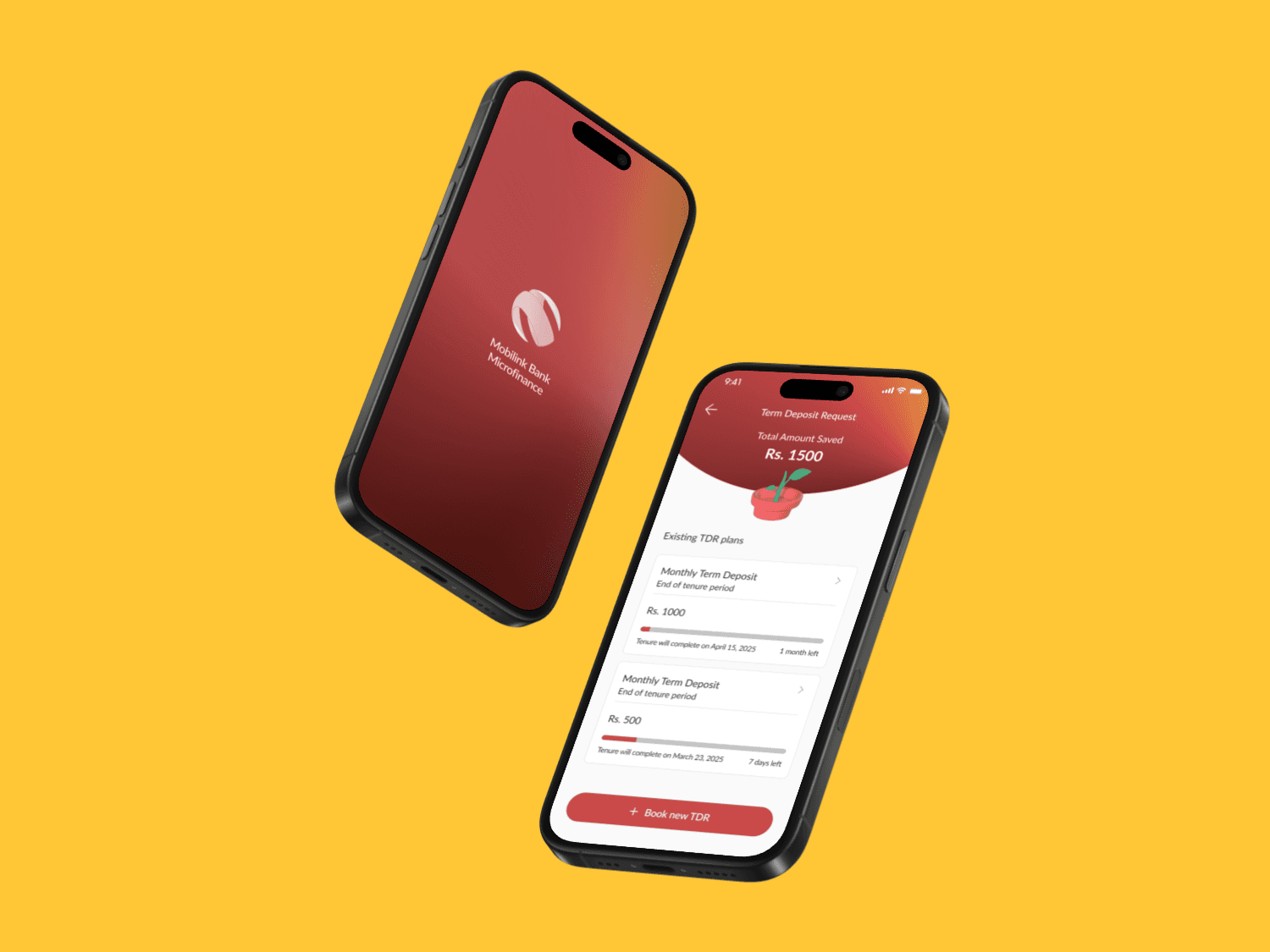
Mobilink Microfinance Bank's mobile app reached a wide base of users — but it wasn't working for most of them. Unclear navigation, inconsistent branding, unforgiving input formats, and poor accessibility had created persistent friction that eroded trust and kept adoption low. For users with limited digital literacy, shared devices, or deep skepticism toward digital financial tools, that friction wasn't just inconvenient — it was a barrier to the financial services the platform was built to provide.
The goal wasn't just to make the app easier to use. It was to make it trustworthy for the people who needed it most.
The redesign was grounded in field research before a single screen was touched. Over 20 in-person sessions across Islamabad brought us into direct contact with the app's primary users — women, daily wage workers, and small-scale entrepreneurs — to understand how they actually navigated digital tools, and where the existing app lost them. Shared device usage, low familiarity with financial interfaces, and an institutional tone that felt distant rather than accessible all emerged as recurring friction points.
That fieldwork ran in parallel with a comprehensive audit of the existing app against Nielsen's usability heuristics and WCAG 2.1 guidelines, surfacing the specific interaction and visual failures driving drop-off. Research findings were then synthesized into personas, journey maps, and service blueprints — not as deliverables in themselves, but as tools to shift internal focus from feature checklists to real user goals.
From there, I led the redesign of over 10 core user flows — onboarding, bill payments, fund transfers — each iterated through multiple rounds of user testing via Maze and in-person sessions. A refreshed visual identity system was developed alongside the interaction work: new color, contrast, and spacing decisions that created clearer hierarchy and a warmer, more approachable feel without departing from the brand's institutional credibility.
The final platform met key accessibility and inclusion benchmarks — but more meaningfully, it felt usable and trustworthy to the people it was built for, whether they were opening the app for the first time or returning after previous frustration.
The project is a reminder that designing for inclusion at this scale requires more than accessibility compliance. It requires genuine proximity to users — translating their real constraints and mental models into interfaces that meet them where they are. That's what this project delivered.