projects / healthops planning platform
HealthOps × Ideate Innovation
A planning platform where every report doesn't just show the numbers — it tells leadership what they mean, and stays current on its own.
The content, design, and insights presented in this case study are the proprietary intellectual property of Ideate Innovation. This work is showcased for portfolio purposes only and may not be copied, recreated, or distributed in any form without the express written permission of Ideate Innovation.
the reframe.
01
insight, not decoration
Write the insight, not
just
plot the line.
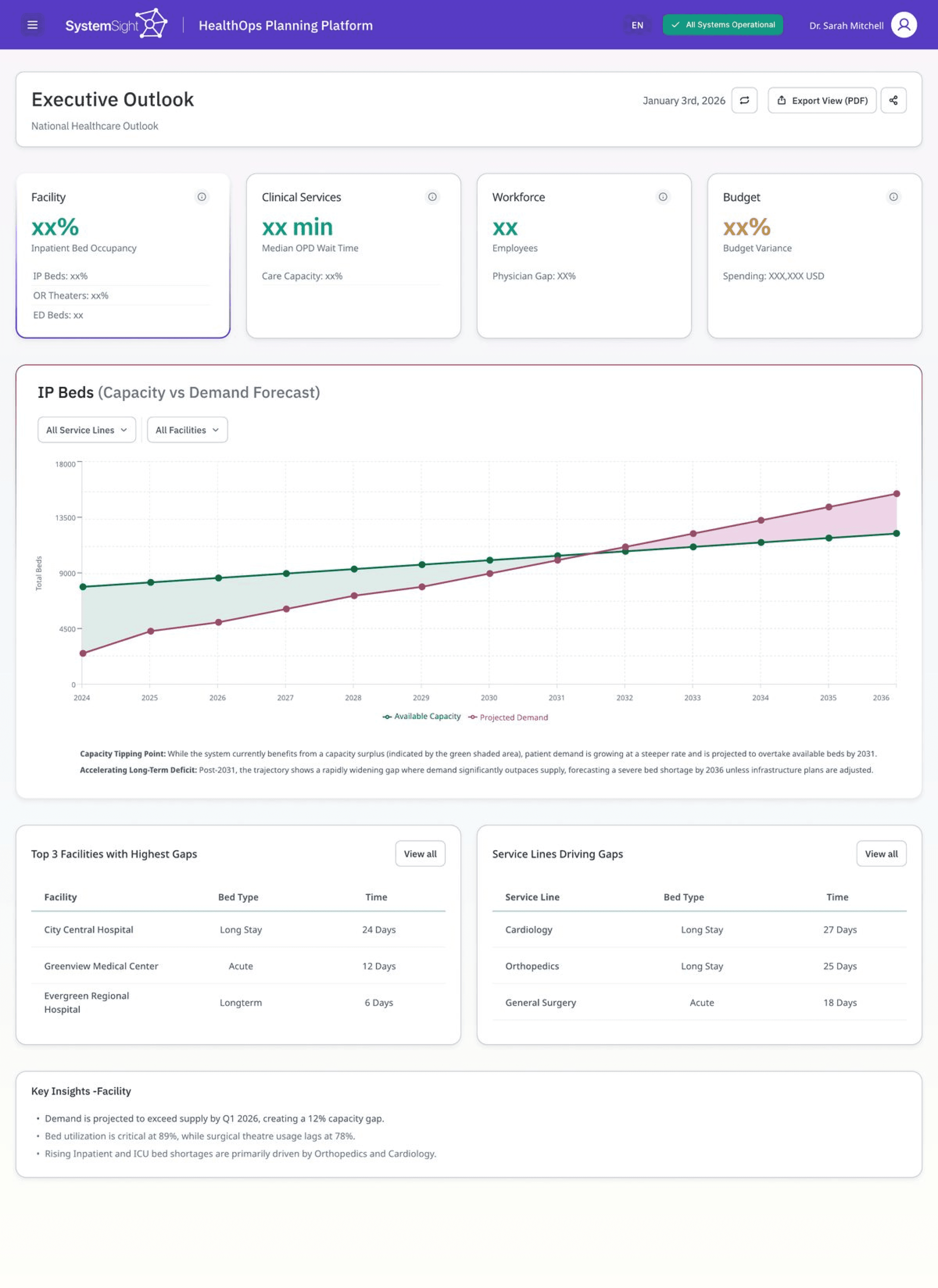
Every forecast carries a written read tied to
the graph's story — a “capacity tipping
point,” the year demand overtakes supply —
instead of leaving leadership to read two
crossing lines.
1
System status, up top — beds, wait time, workforce and budget as four headline numbers.
hierarchy
2
The crossover — where projected demand overtakes capacity: 2031
clarity
3
Wrote the takeaway as type — a plain-language read sits under the chart so the conclusion never depends on chart-literacy
legibility
executive outlook · forecast
1
hierarchy
1
signal
1
signal
02
triage at a glance
One status language
anyone can read.
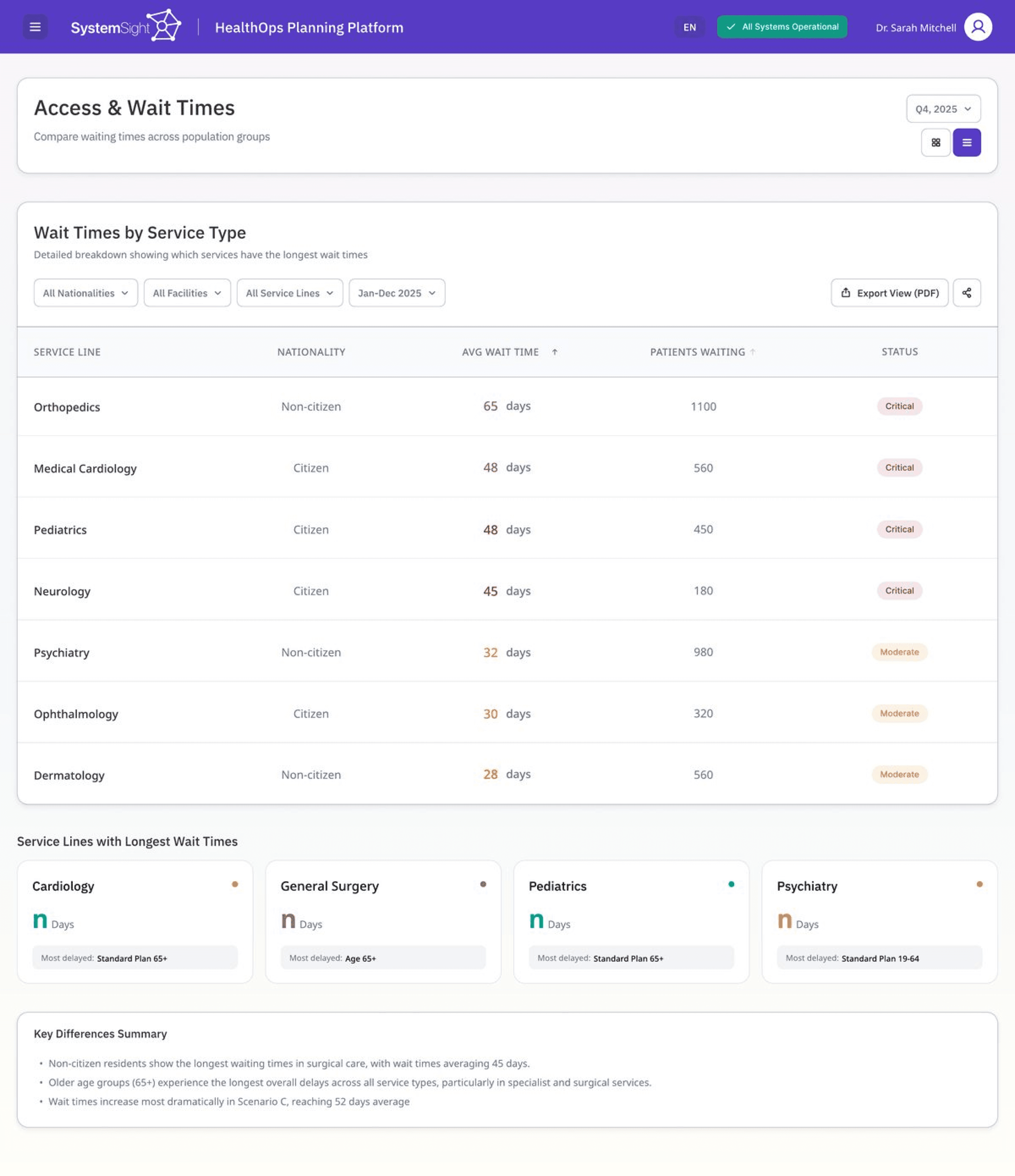
Critical / Moderate / Stable badges in a
single colour system let a department head
scan a wait-times table and know where to
look first — no analyst required.
1
Encoded severity as colour, not numbers — a status badge scans faster than a value, so triage happens pre-attentively
perception
2
Sorted the table by impact — the worst cases surface first, so the structure does the prioritising
prioritisation
3
Summarised the pattern in words — the table answers "what," the written line answers "so what"
synthesis
access & wait times
1
03
always current
Reports that
stay alive.
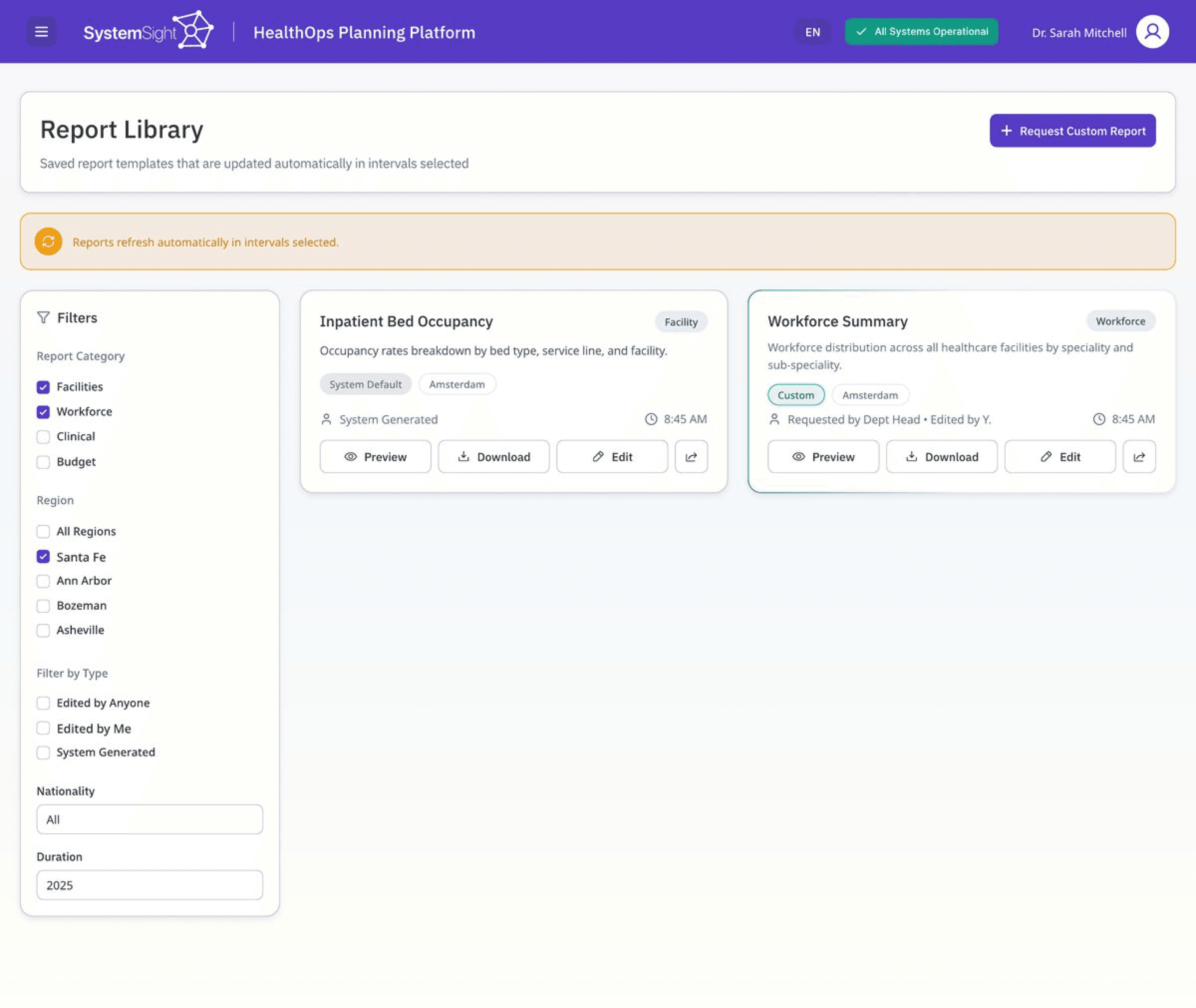
A library where templates refresh
automatically on a set interval — system-
generated and custom reports side by side,
always current, never a one-off snapshot.
1
Designed for "set and forget" — surfacing the refresh state turns static files into something trustworthy at a glance (green chip)
trust
2
Flattened two report types into one shelf — system and custom look identical, so the source never adds friction
cognitive load
consistency
3
Put filtering where scanning starts — controls sit left-of-content, matching how the eye moves
hierarchy
report library
1
1
04
calm under density
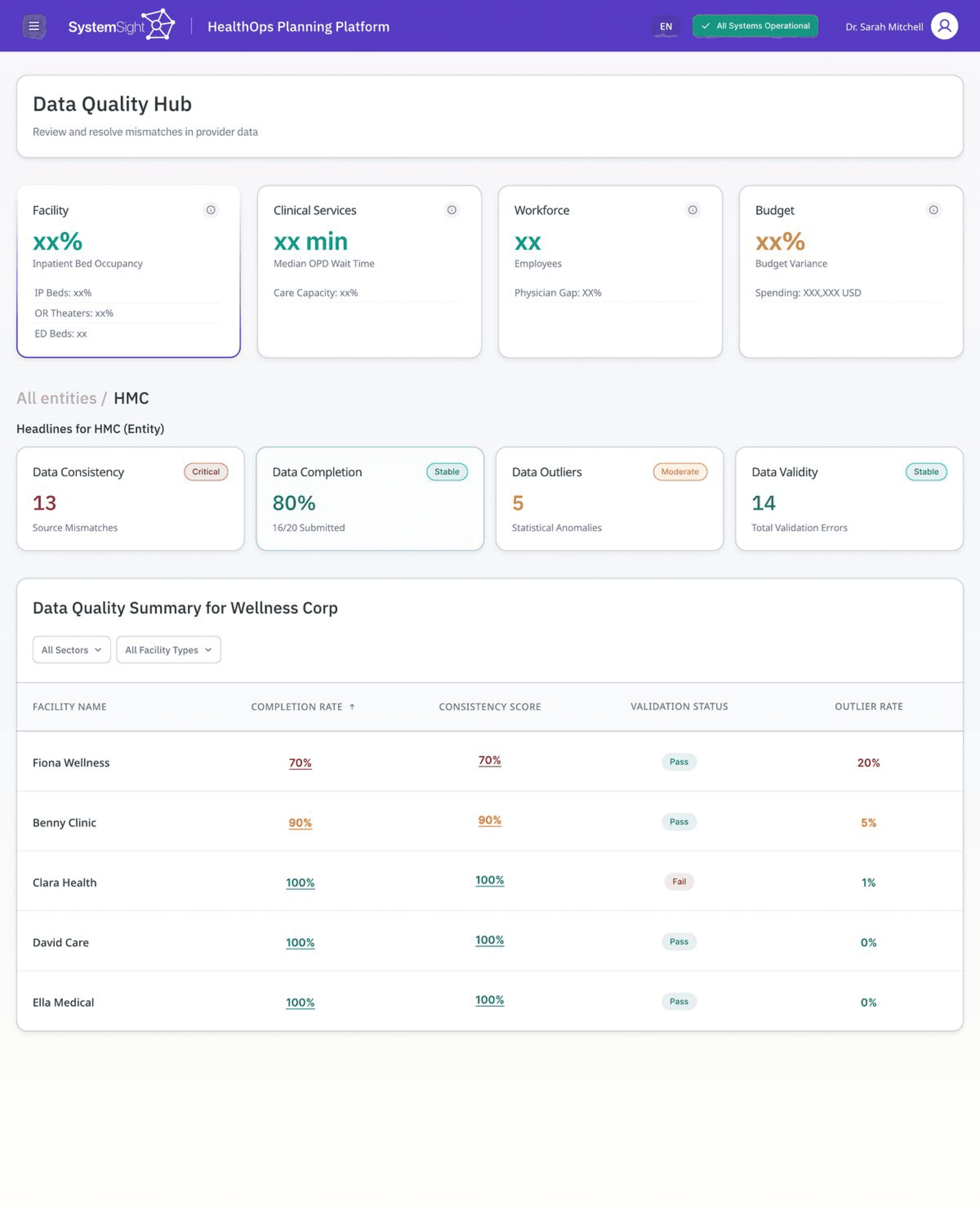
A calm surface for
high-stakes data.
Layered shadows, soft cards and restrained
type give a data-heavy tool a sense of order
— so a hub full of mismatches still feels
under control. Built from real brand tokens in
Figma.
1
Reused one status language across every screen
recall
consistency
2
Reduced validation to a binary — Pass / Fail replaces interpreting a score, so each row resolves instantly
decisiveness
data quality hub
the Outcome.
4
core views designed to one shared system
[ # ]
drop in a true metric — facilities, components,
or review-cycle time
[ → ]
an outcome you can stand behind — adoption,
handoff, or stakeholder result